Key Components
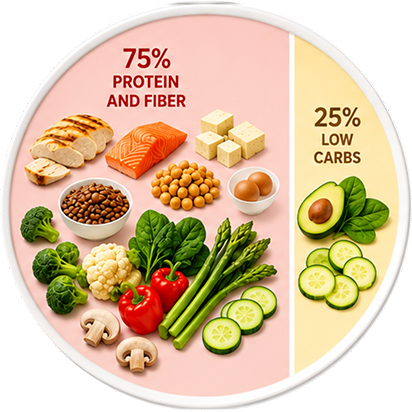
75%
Protein and Fiber
The bulk of your plate for satiety and muscle health.
25%
Low Carbohydrates
Controlled portions of complex carbs for steady energy.
Focusing on a sustainable calorie deficit to achieve weight loss while maximizing nutritional qualities.
The bulk of your plate for satiety and muscle health.
Controlled portions of complex carbs for steady energy.
An effective obesity meal plan focuses on a sustained calorie deficit through nutrient-dense, high-fiber, and high-protein foods. It's important to fill half the plate with non-starchy vegetables, one-quarter with protein, and one-quarter with complex carbs.
Use the 1/2 veg, 1/4 protein, 1/4 carbs ratio.
Choose grilled or roasted methods over frying.
Prioritize Veggies
Low-calorie and high-volume (leafy greens) help you feel full.
Healthy Snacks
Fruits or Greek yogurt to avoid unhealthy cravings.
Fiber Intake
Target high-fiber foods to aid digestion and metabolic rate.
Steaming
Roasting
Grilling
Air-fryer
Regular physical activity (30 mins/day).
Avoid sugary drinks and highly processed snacks.
Monitor portion sizes using the Plate Method.
Prioritize adequate sleep and stress management.
