Diabetes Diet

Focusing on consistent carbohydrate intake, high fiber, and lean proteins to effectively manage blood sugar levels.

Balanced Diabetes Plate

50%

Non-Starchy Vegetables

Leafy greens, broccoli, and peppers for fiber.

25%

Lean Protein

Chicken, fish, or tofu to help stabilize glucose.

25%

Complex Carbohydrates

Whole grains like brown rice or quinoa.

Include small portions of:

Healthy Fats · Low-fat Dairy · Fresh Fruit
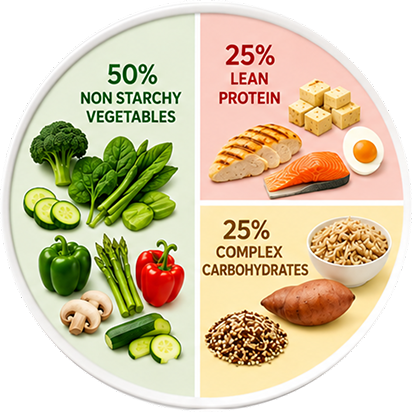
50% Non-Starchy Veggies
25% Protein
25% Complex Carbs

Foods to Limit

Sugary Items

Cakes, candies, and sweetened sodas.

Refined Carbs

White bread, white rice, and regular pasta.

Saturated Fats

Fried foods, high-fat dairy, and processed meats.

Low Carbs Diet & Meal Plan

Low-carb eating involves reducing total daily carb intake to less than 130g. This is particularly effective for managing Type 2 diabetes and heart disease risk in the short term.

Context: A slice of bread (15-20g carbs) is roughly equal to one apple. A large jacket potato can contain up to 90g of carbs.

Safety Note: Not recommended for children (affects growth) or Type 1 diabetics without specialist supervision.

Type 2 Diabetes Benefits

  • Weight Management
  • Improved Blood Glucose
  • Reduced Heart Disease Risk

Cooking for Diabetes

Steaming

Boiling

Grilling

Roasting

Air-frying

Signs & Prevention

Common Signs

Excessive Thirst Frequent Urination Blurry Vision Extreme Fatigue

How to Prevent

  • Lose extra weight
  • Be more physically active
  • Eat healthy plant foods (Fiber)
  • Skip fad diets and make healthy choices